Adaptive Thermal Comfort with the Heated Poncho Wrap
 Maya ChenContributing Editor
November 1, 2026. This review examines the integration of active heating elements into adaptive garments for the elderly. It is intended for caregivers and individuals prioritizing mobility and thermal regulation over conventional passive insulation.
The Failure of Traditional Senior Outerwear
The conventional wisdom says that layering is the most effective way for seniors to manage thermal discomfort in fluctuating environments. However, this approach ignores the physical toll of weight and the complexity of fasteners. For many seniors, the act of putting on a heavy wool coat or a complex button-down cardigan is a barrier to independence. Research from the National Institutes of Health highlights that aging skin becomes thinner and less efficient at regulating temperature, leading to a chronic state of coldness that layers alone cannot solve without compromising range of motion. Here's the part nobody talks about: heavy layers increase the risk of falls due to restricted arm movement and altered centers of gravity. When we look at the data on senior mobility, the focus is often on footwear, but the upper body's freedom is equally critical for maintaining balance. Furthermore, standard electric blankets pose a significant tripping hazard due to trailing cords, making them a poor choice for those who move between rooms. The reliance on sedentary heating solutions creates a forced immobility that is detrimental to long-term health outcomes. A shift toward wearable, battery-operated systems represents a necessary departure from the stationary "heating pad" model that has dominated geriatric care for decades.
Engineering Mobility in the Heated Poncho Wrap
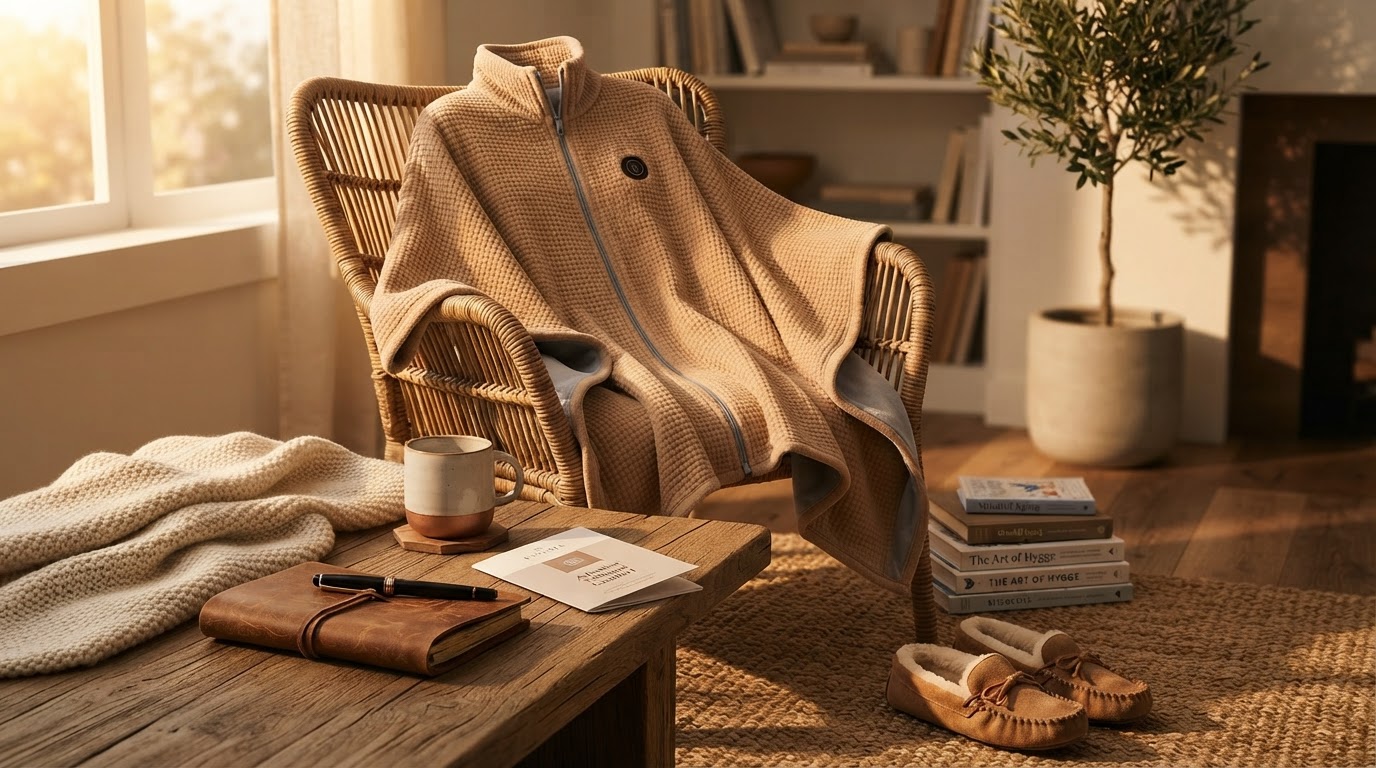
The Heated Poncho Wrap addresses these structural failures by utilizing a hands-free, draped design that requires zero fine motor skills to secure. Unlike a washable electric shoulder warmer wrap which may require precise positioning, the poncho format utilizes gravity to maintain contact with the body's core. The technical advantage lies in the power source; by using a battery-operated system rather than a wall outlet, the user maintains a full range of motion. This is particularly relevant for those seeking a cordless heated wrap for elderly users who need to transition from a seated position to walking without unplugging. The fabric is lightweight enough to avoid the fatigue associated with heavy parkas, yet the active heating elements provide a concentrated thermal output that passive materials cannot match. Data from user queries suggests a high demand for a heated cape for office use, but the application for seniors is more rigorous, requiring a balance of heat distribution across the back and shoulders. For those managing specific localized issues, such as a best heated wrap for chronic neck pain, the poncho design ensures the heating elements remain flush against the cervical spine without the need for tight, restrictive straps. The inclusion of sleeves in some wearable blanket designs often complicates the process of putting the garment on; the open-sided poncho architecture bypasses this entirely, making it a superior choice for those with limited shoulder rotation or arthritis.
Evaluating Adaptive Heating Systems
When selecting a thermal garment for a senior, the decision should be based on mechanical simplicity and safety rather than aesthetic appeal. Run the math: a garment that takes three minutes to put on will be used 60% less often than one that takes three seconds. The Heated Poncho Wrap falls into the latter category. To determine if a specific wrap meets the needs of an elderly user, follow this technical checklist:
- Weight Distribution: Ensure the battery pack is positioned centrally or in a deep pocket to prevent the garment from sliding off one shoulder.
- Fastener Type: Prioritize magnetic closures or simple large-format buttons over zippers or small hooks that require high dexterity.
- Portability: Verify that the unit is a usb heated poncho for travel or home use, ensuring the battery is lightweight enough not to cause neck strain.
- Safety Cut-offs: The system must include an automatic shut-off timer to prevent skin irritation or burns in users who may have reduced heat sensitivity.
- Maintenance: The heating elements must be durable enough to withstand regular cleaning without degrading the internal wiring.